
TEST LIKE THE BEST COMMERCIAL POOLS
When it comes to monitoring water quality, pool operators have a choice between time-tested visual methods that depend on an ability to either see a change in color (drop-count titrations) or match colors for a reading (colorimetric tests), or sophisticated electronic instruments that take the reading for you. Factors to consider when choosing water-testing supplies for your applications include:
Ö initial investment,
Ö cost-per-test,
Ö degree of accuracy needed to translate test results to treatment,
Ö time to perform each procedure,
Ö operator training required,
Ö potential for operator error,
Ö ruggedness and portability,
Ö maintenance requirements,
Ö anticipated useful life, and
Ö regulatory requirements.
Taylor's customer service representatives are trained to assist you in making these decisions. It is likely your testing arsenal will include several different methods. This was certainly true when we asked the winners in Aquatics International's 2006 Best of Aquatics contest what they were testing with.
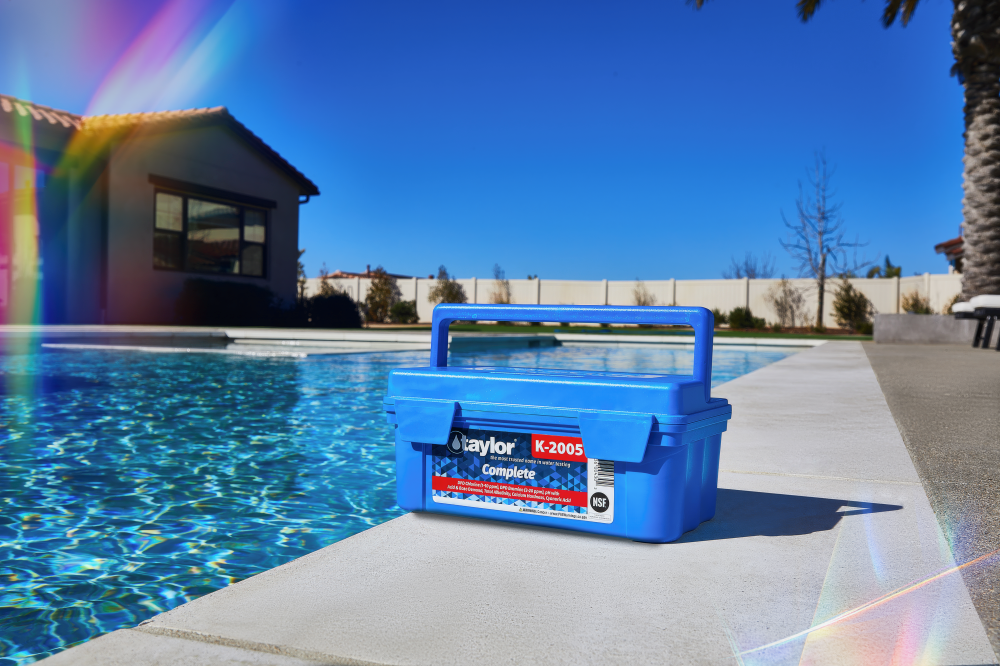
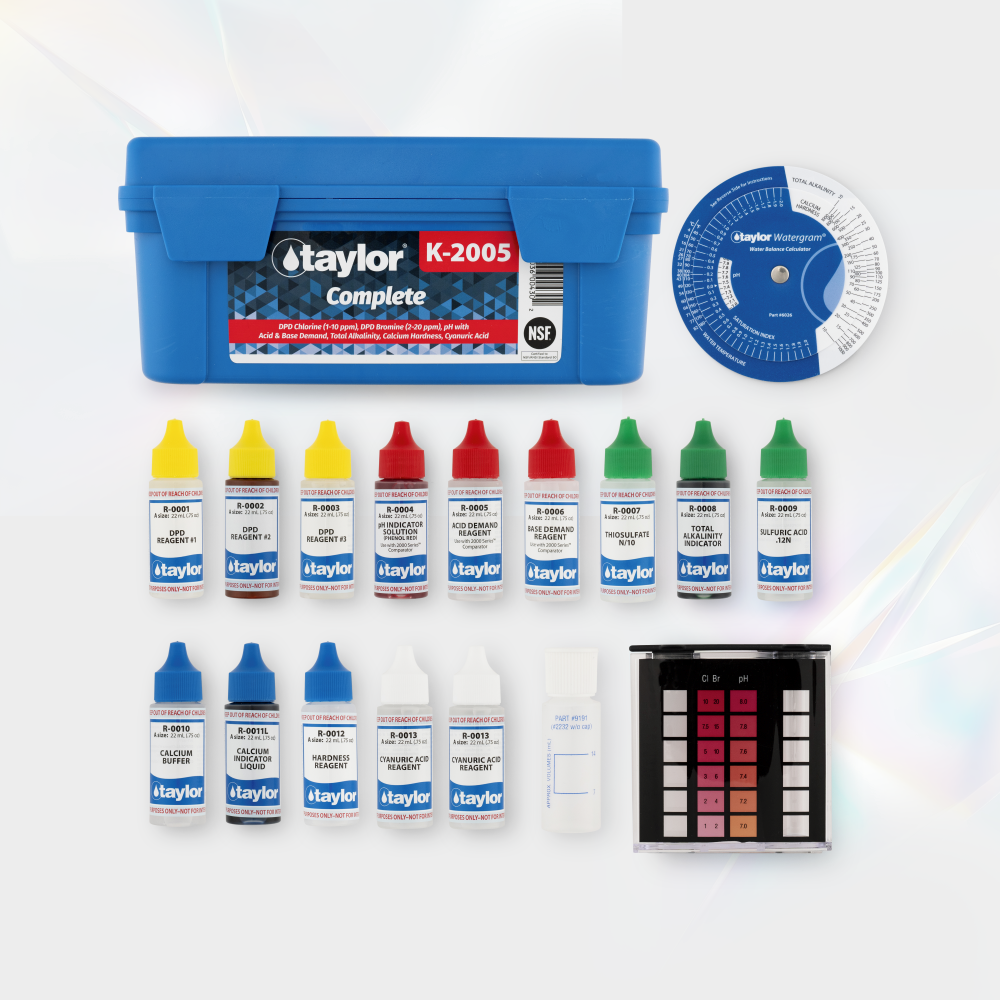
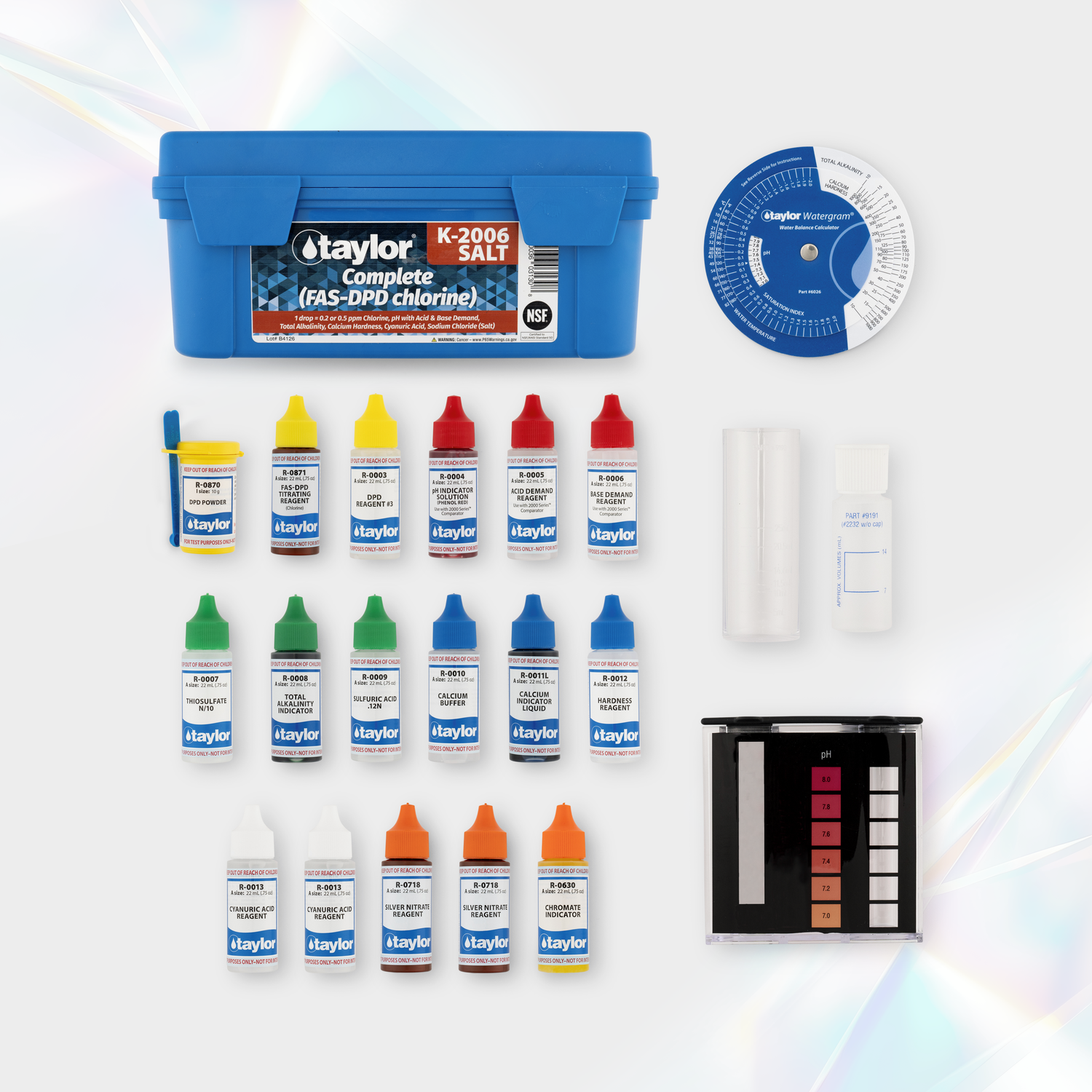
The most popular choice was our best seller, the Complete™ Kit (K-2005). So named because it includes all the tests needed to keep pool/spa water sanitary and in balance, the Complete Kit is distinguished by:
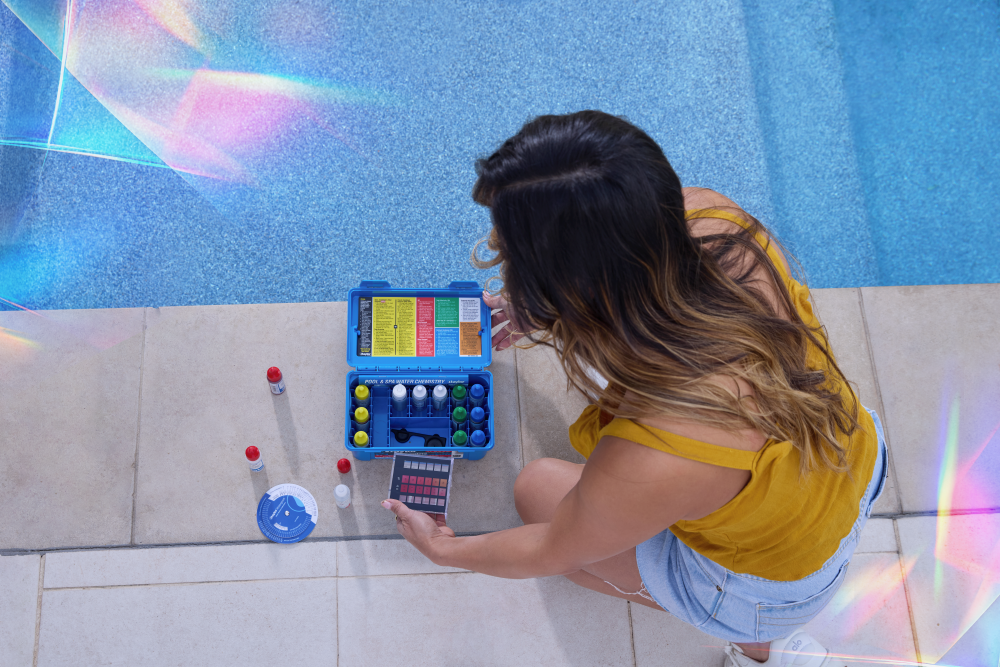
• a comparator block with six printed-color standards for color-matching tests, namely chlorine, bromine, pH, and acid and base demand (for adjusting pH);
• a large sample tube built into the block for performing drop tests, namely total alkalinity and calcium hardness;
• a small sample tube built into the block for performing the turbidity test used to monitor cyanuric acid;
• 14 bottles of .75 oz. liquid reagents;
• high-range chlorine and bromine tests (.5-5 ppm and 1-10 ppm, respectively, with 10 ppm chlorine achievable by dilution of the sample water);
• a Watergram™ for determining the Saturation Index, i.e., scaling or corrosive water;
• Taylor's 60-page testing guide with treatment tables; and a
• 7.5"w x 4.5"h x 3.75"d polypropylene case (with room to add up to three more reagent bottles—for instance, Deox Reagent (R-0867) for removing sanitizer-test interference caused by non-chlorine shock products).

K-2005
Another popular pick was the Professional Complete Kit (K-1741C). This "poolside lab" features:
• liquid-to-liquid color-matching tests for chlorine employing Taylor’s signature Slide™ comparators (0-3 ppm and 1.0-10 ppm);
• more Slide comparators for pH, low-range copper, and low-range iron;
• acid and base demand tests for adjusting pH;
• a stand-alone sample tube for performing drop-count titrations, namely total alkalinity, total hardness, and calcium hardness;
• a stand-alone view tube for performing the turbidity test used to monitor cyanuric acid;
• 22 bottles of 2 oz. liquid reagents;
• a Watergram™ for determining the Saturation Index;
• Taylor's 60-page testing guide with treatment tables; and a
• 18.5"w x 15.5"h x 5.5"d attaché-type carrying case.

K-1741C
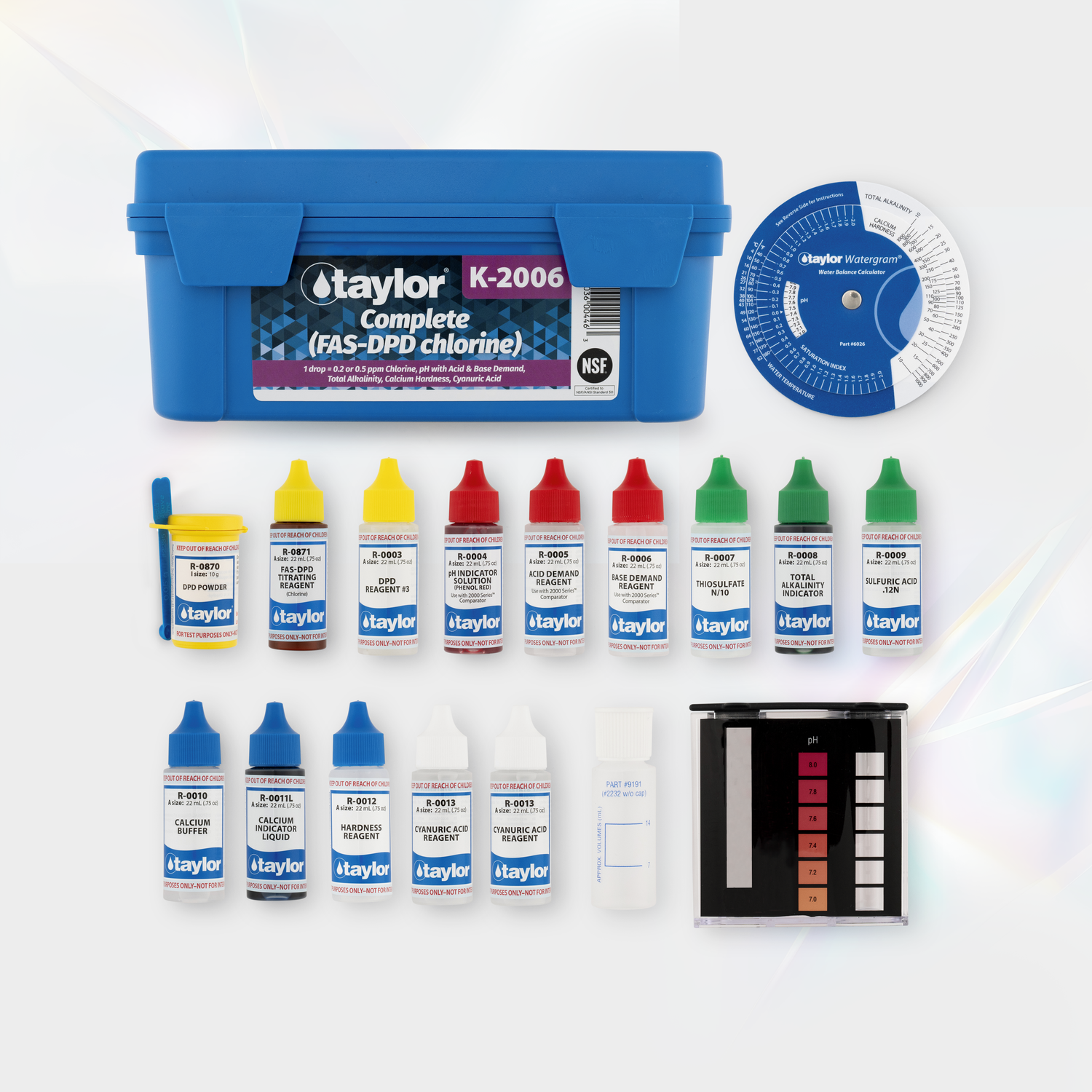
Four of the winning pools augment their DPD chlorine testing with the Chlorine FAS-DPD Drop Test (K-1515-A has .75 oz. bottles, K-1515-C has 2 oz. bottles). There are three main advantages to this variation on the standard DPD test. First, it will detect undesirable combined chlorine (chloramines) at the level most authorities recommend superchlorinating the water to remove them, namely 0.2 ppm. Above 0.2 ppm combined chlorine causes eye and mucous membrane irritation and gives off the "chlorine odor" associated with a poorly maintained pool.
Second, superchlorinated water will not bleach out the pink color that is used to make the chlorine reading, as can happen with the standard DPD test once the chlorine level reaches about 10 ppm. The FAS-DPD test will give an accurate reading as high as 20 ppm, so it is very useful for determining when swimmers can reenter the pool after it has been shocked.
Finally, because the reading for free chlorine or combined chlorine is made when the treated sample changes from pink to clear, this test is a boon for people who have a problem color-matching shades of red. Anyone can see the change from a color to no color.
For more information on any of these kits, please visit the Product Info area of our website. We especially recommend viewing the demo of the FAS-DPD test posted here.

K-1515-C